Select each award below to expand and view information about the award.
The Adele L. Boskey Award
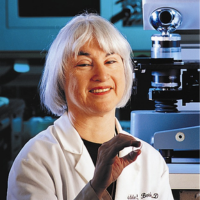 The Adele L Boskey Esteemed Award for Bone and Mineral Research recognizes an ASBMR member for outstanding and major scientific contributions, leadership and mentorship in the area of bone and mineral research especially in the areas of mechanisms of mineralization, bone mineral, bone quality, and mechanobiology. The award includes a $2,000 USD honorarium and a plaque which is presented at a plenary session at the Annual Meeting.
Dr. Boskey was a pioneer and strong advocate for understanding the process by which mineralized tissues such as bone and teeth incorporate calcium and phosphate into their matrices, how the matrices are involved in that process, and the role of the biomineral in bone disease. To quote the New York Times and the Hospital for Special Surgery, she was a “trail-blazer” in understanding the mechanisms responsible for bone mineralization. She continuously applied new technologies revealing deeper insight into the mineral properties of the bone in musculoskeletal disease. Her characterization of the properties of the mineral compartment, the mechanisms of biomineralization and the crystal defects that related to the compromised quality of genetic and acquired bone disorders, were paradigm shifting discoveries.
Throughout her career devoted to unraveling the mechanisms responsible for biomineralization, Dr. Boskey’s passion was promoting the careers of young investigators, especially female investigators and the mentoring of clinician investigators. She is responsible for the successful careers of hundreds of investigators whose research programs are focused on the physiological mineral phase of tissues and pathological calcification.
Nomination Questions
- Outline the nominee’s scientific contributions, leadership, and mentorship in the field of bone and mineral research.
- What are the nominee’s contributions specifically in the areas of mechanisms of mineralization, bone mineral, bone quality, and mechanobiology?
- What are the wide-ranging applications for the bone and mineral field?
Past Recipients
- 2025: Deepak Vashishth, PhD
- 2024: Christopher Hernandez, PhD
- 2023: Dobrawa Napierala, PhD
- 2022: Edward Guo, PhD
- 2021: Mary Bouxsein, PhD
- 2020: Tamara Alliston, PhD
- 2019: Marc McKee, PhD
- 2018: Marjolein van der Meulen, PhD
The Early Career Clinical Investigator Award Honoring Robert Marcus, MD*
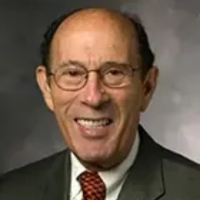 This award recognizes outstanding clinical research in the bone, mineral, and musculoskeletal field. It is presented annually to an ASBMR member who has completed their terminal training — professional degree, residency, fellowship, or equivalent — within the past 15 years. The recipient receives a $2,000 USD honorarium and a commemorative plaque, which is presented during a plenary session at the ASBMR Annual Meeting.
Named in honor of Robert A. Marcus, MD, the award celebrates a leader whose career exemplifies excellence in clinical research and service to the field. Dr. Marcus conducted pioneering studies on hormone therapy, exercise, and skeletal biology at Stanford, and later advanced osteoporosis treatment through his leadership at Eli Lilly, including work on teriparatide. A prolific author and editor of the definitive textbook, "Osteoporosis," he has also made extensive contributions to ASBMR through leadership roles, editorial service, and decades of abstract and manuscript review.
Nomination Questions
- What distinguishes this nominee from his/her peer group?
- How has the nominee established himself/herself as a solid investigator at a relatively young age?
- What are the current and anticipated impacts on the field from his/her research?
*Any interruption in a candidate's career as an independent investigator will be taken into account in determining eligibility.
Past Recipients
- 2025: Elizabeth Winter, PhD
- 2024: Alison Boyce, MD
- 2023: Elaine Yu, MD
The Frederic C. Bartter Award
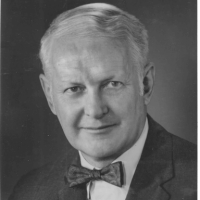 The Frederic C. Bartter Award is given to an ASBMR member in recognition of outstanding clinical investigation in disorders of bone and mineral metabolism. The award includes a $2,000 USD honorarium and a plaque which is presented at a morning plenary session at the Annual Meeting.
Frederic C. Bartter, MD, was one of the finest scientists and clinical investigators in academic medicine. In conjunction with Dr. Fuller Albright he developed cortisone treatment for congenital adrenal hyperplasia, and with Dr. William Schwartz described the syndrome of inappropriate ADII secretion. In addition, Dr. Bartter elucidated the role of aldosterone and contributed significantly to the study of hyperparathyroidism. From 1951 to 1978 he served as Chief of the NIH Endocrine-Hypertension Branch, and then became Associate Chief of Staff for Research at the Veterans Administration Medical Center and Professor at the University of Texas.
Nomination Questions
- Outline the nominee's clinical studies/achievements and the progression of his/her scientific/clinical investigations through time.
- What are the wide-ranging applications to the bone and mineral field and to the public at large?
Past Recipients
-
2025: Michael McClung, MD
- 2024: Peter Ebeling, AO, FRACP, MBBS, MD
- 2023: Bente Langdahl, MD, PhD
- 2022: Benjamin Leder, MD
- 2021: Karl Insogna, MD
- 2020: Felicia Cosman, MD
- 2019: Douglas Kiel, MD
- 2018: Michael A Levine, MD
- 2017: Dennis M Black, PhD
- 2016: Eric Orwoll, MD
- 2015: Socrates Papapoulos, MD
- 2014: Richard Eastell, MD, FRCP
- 2013: Elizabeth Shane, MD
- 2012: Michael Econs, MD
- 2011: Jane Cauley, PhD
- 2010: Ian Reid, MD, MBChB
- 2009: Juliet Compston, MD, FRCP
- 2008: Steven Cummings, MD, FACP
- 2007: Michael P Whyte, MD
- 2006: Sundeep Khosla, MD
- 2005: John Kanis, MD
- 2004: Pierre Delmas, MD, PhD
- 2003: Robert Recker, MD
- 2002: Ego Seeman, MD, FRACP
- 2001: Joseph Melton, III, MD
- 2000: John P Bilezikian, MD
- 1999: Pierre Meunier, MD
- 1998: BE Christopher Nordin, MD, PhD
- 1997: Robert Lindsay, MBChB, PhD
- 1996: Conrad Johnston, Jr, MD
- 1995: Michael Parfitt, MD
- 1994: Robert P Heaney, MD
- 1993: Francis H Glorieux, MD, PhD
- 1992: Norman H Bell, MD
- 1991: Eduardo Slatopolsky, MD
- 1990: Lawrence Riggs, MD
- 1989: Arthur E Broadus, MD, PhD
- 1988: Charles YC Pak, MD
- 1987: Constantine Anast, MD
- 1986: Jack Coburn, MD
The Fuller Albright Award*
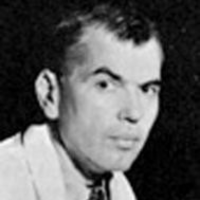 The Fuller Albright Award is given in recognition of admirable scientific accomplishment in the bone and mineral field to an ASBMR member who has completed a PhD, MD, residency training, fellowship or equivalent (whichever is later) within the past 15* years. The award includes a $2,000 USD honorarium and a plaque, presented at the Annual Meeting.
*ASBMR recognizes some applicants may experience career disruptions during their research or research training. ASBMR will consider requests to extend the 15-year period for a period equivalent to the time away with a provided explanation for the disruptions.
Fuller Albright, MD, was a much beloved investigator and teacher whose unparalleled achievements include significant contributions to the study of the renal effects of parathyroid hormone, estrogen use in osteoporosis, Vitamin D resistant rickets, and establishment of the Endocrine Unit of the Massachusetts General Hospital.
Nomination Questions
- What distinguishes this nominee from his/her peer group?
- How has the nominee established himself/herself as a solid investigator at a relatively young age?
- What are the current and anticipated impacts on the field from his/her research?
Past Recipients
- 2025: Joel Boerckel, PhD
- 2024: Noriaki Ono, DDS, PhD
- 2023: Marc Wein, MD, PhD
- 2022: Matthew Greenblatt, MD, PhD
- 2021: Mathieu Ferron, PhD
- 2020: Martina Rauner, PhD
- 2019: Benjamin Levi, MD
- 2018: Christopher J Hernandez, PhD
- 2017: Melissa A Kacena, PhD
- 2016: Florent Elefteriou, PhD
- 2015: Fernando Rivadeneira, MD, PhD
- 2014: Yibin Kang, PhD
- 2013: Stavroula Kousteni, PhD
- 2012: Laura Calvi, MD
- 2011: Alexander G Robling, MD
- 2010: Natalie Sims, PhD
- 2009: Jennifer Westendorf, PhD
- 2008: Kurt Hankenson, DVM, PhD
- 2007: Kenneth E White, PhD
- 2006: Hong-Wen Deng, PhD
- 2005: Mary Bouxsein, PhD
- 2004: Hiroshi Takayanagi, MD, PhD
- 2003: Patricia Ducy, PhD
- 2002: Nobuyuki Udagawa, MD
- 2001: Charles H Turner, PhD
- 2000: Dwight Towler, MD, PhD
- 1999: Theresa A Guise, MD
- 1998: Shigeaki Kato, PhD
- 1997: René St-Arnaud, PhD
- 1996: Clinton T Rubin, PhD
- 1995: Roberto Pacifici, MD
- 1994: Roberto Civitelli, MD
- 1993: Pamela G Robey, PhD
- 1992: Andrew Arnold, MD
- 1991: Dean T Yamaguchi, MD, PhD
- 1990: Michael A Levine, MD
- 1989: Timothy Chambers, MD
- 1988: Rajiv Kumar, MD
- 1987: Michael P Whyte, MD
- 1986: Michael Rosenblatt, MD
- 1985: Henry M Kronenberg, MD
- 1984: Helen L Henry, PhD
- 1983: Edward M Brown, MD
- 1982: Gregory R Mundy, MD
- 1982: Stephen Marx, MD
- 1981: Mark R Haussler, PhD
- 1980: Michael F Holick, MD, PhD
The Gideon A. Rodan Excellence in Mentorship Award
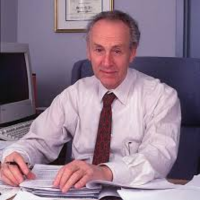 The Gideon A. Rodan Excellence in Mentorship Award is given annually in recognition of outstanding support provided by a senior scientist who has helped promote the independent careers of young investigators in bone and mineral metabolism. The award includes a $2,000 honorarium and a plaque which is presented at a morning plenary session at the Annual Meeting.
Throughout his career, Gideon A. Rodan, MD — the ninth ASBMR President and the first recipient of the ASBMR Excellence in Mentorship Award (now named the Gideon A. Rodan Excellence in Mentorship Award) — was a major contributor to the field of bone cell biology. As a pioneer in this field, Dr. Rodan carried out early, seminal studies in bone cell characterization, signal transduction and cellular and molecular biology.
His outstanding scientific contributions include: isolation and characterization of the first transformed osteoblastic cell line (ROS 17), the dissection of the PTH signal transduction mechanisms, the concept of osteoblast-osteoclast interactions, the cloning of alkaline phosphatase, and the roles of steroids and prostaglandins in bone metabolism. As Director of the Department of Bone Biology and Osteoporosis Research at Merck, he fostered the development of the first bisphosphonate approved for treatment of osteoporosis and provided detailed studies of the mechanisms of action of the bisphosphonates.
Besides his distinguished scientific accomplishments, Dr. Rodan was a leader in service to the field, to the ASBMR, and to the education and training of young investigators.
Nomination Questions
- Provide some general background on the nominee's commitment to fostering mentorship and indicate why that commitment is outstanding.
- Describe specific examples of instances where the nominee helped promote the independent careers of young investigators in the field.
- List names and affiliations of young investigators or former young investigators who were mentored by the nominee.
Past Recipients
- 2025: Cyrus Cooper, MD, PhD
- 2024: Angela Cheung, MD, PhD
- 2023: Roberto Civitelli, MD
- 2022: Ego Seeman, MD
- 2021: Marian Hannan, DSc, MPH
- 2020: David Roodman, MD, PhD
- 2019: Dana Gaddy, PhD
- 2018: Teresita M Bellido, PhD
- 2017: Masaki Noda, MD, PhD
- 2015: Mitchell Schaffler, PhD
- 2014: Graham Russell, MD, PhD
- 2013: Gary Stein, PhD
- 2012: Steven Teitelbaum, MD
- 2011: Henry Kronenberg, MD
- 2010: David Burr, PhD
- 2009: John Bilezikian, MD
- 2008: Lawrence Raisz, MD
- 2007: Jack Martin, MD, DSc
- 2006: Lawrence Riggs, MD
- 2005: Barbara Kream, PhD
- 2004: Claude Arnaud, MD
- 2003: Webster SS Jee, PhD
- 2002: Sylvia Christakos, PhD
- 2001: Gideon Rodan, MD, PhD
The Lawrence G. Raisz Award
 The Lawrence G. Raisz Award recognizes an ASBMR member for outstanding achievements in preclinical and translational research (cellular or in animals). The award includes a $2,000 USD honorarium and a plaque which is presented at a morning plenary session at the Annual Meeting.
Lawrence G. Raisz, MD, was a preeminent leader, researcher, mentor, teacher, and clinician in the field of bone and mineral metabolism for 50 years. Dr. Raisz was a founding member of ASBMR, its second President and the first Editor-in-Chief of the Journal of Bone and Mineral Research. As a researcher, teacher, and clinician, Dr. Raisz epitomized the ideals of the physician-scientist. His knowledge of the scientific literature in basic and clinical bone biology was unparalleled. Over the years, his NIH-funded research program focused on mechanisms of bone formation and resorption and the pathogenesis of osteoporosis. He was the author of over 450 scholarly works in the field. Dr. Raisz was on the Board of Trustees Distinguished Professor of Medicine Emeritus at the University of Connecticut Health Center (UCHC) in Farmington, CT.
Nomination Questions
- Outline the nominee's record of outstanding achievements in preclinical translational research (cellular or in animals) in the bone and mineral field.
- What are the wide-ranging applications for the bone and mineral field?
Past Recipients
- 2025: Jean Jiang, PhD
- 2024: Eileen Shore, PhD
- 2023: Peter Croucher, PhD
- 2022: Serge Ferrari, MD
- 2021: Lorenz Hofbauer, MD
- 2020: Claes Ohlsson, MD
- 2019: Anna Teti, PhD
- 2018: Jose Luis Millan, PhD
- 2017: David Roodman, MD, PhD
- 2016: Marja M. Hurley, MD
- 2015: Adele Boskey, PhD
- 2014: Stuart Ralston, MBChB, MD
- 2013: Clifford Rosen, MD
- 2012: Ernesto Canalis, MD
- 2011: Hiroshi Kawaguchi, MD, PhD
- 2010: David Goltzman, MD
The Louis Avioli Founders Award
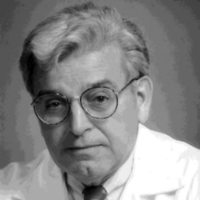 The Louis V. Avioli Founders Award was first presented at the 2000 ASBMR Annual Meeting in Toronto, Canada. This award honors an ASBMR member for fundamental contributions to bone and mineral basic research. There is also a memorial lecture named in his honor at the ASBMR Annual Meeting. The award includes a $2,000 USD honorarium and a plaque which is presented after the Louis V. Avioli Memorial Lecture at the Annual Meeting.
Louis V. Avioli, MD, ASBMR's first president, was one of the world's leading medical authorities on osteoporosis and calcium metabolism. He pioneered research into the skeleton and methods for detecting vitamin D in the blood, and identified bone loss as a potentially curable condition. Louis Avioli was a founding member of ASBMR. His research, like his commitment to the ASBMR, mentorship and friendship, has had a profound impact on the field. There is also a memorial lecture named in Louis Avioli's honor at the ASBMR Annual Meeting.
Nomination Questions
- Outline the nominee's basic research achievements and explain why these are landmark achievements.
- Outline the progression of his/her scientific investigations over time.
- How has his/her research advanced the field? What are the long-term ramifications of research in broad terms?
- What are the wide-ranging applications for the bone and mineral field?
Past Recipients
- 2025: Stavroula Kousteni, PhD
- 2024: Lynda Bonewald, PhD
- 2023: Fanxin Long, PhD
- 2022: René St-Arnaud, PhD
- 2020: Moustapha Kassem, MD, PhD
- 2019: Pamela Robey, PhD
- 2018: Nicola C Partridge, PhD
- 2017: Subburaman Mohan, PhD
- 2016: Daniel Bikle, MD, PhD
- 2015: Paula Stern, PhD
- 2014: Michael Holick, MD, PhD
- 2013: Thomas Clemens, PhD
- 2012: Wesley Pike, PhD
- 2011: Roberto Pacifici, MD
- 2010: Pierre Marie, PhD
- 2009: Rajesh Thakker, MD, FRCP
- 2008: Rajiv Kumar, MD
- 2007: David Roodman, MD, PhD
- 2006: Andrew Arnold, MD
- 2005: Gino Segre, MD
- 2004: Ernesto Canalis, MD
- 2003: Edward Brown, MD
- 2002: Roland Baron, DDS, PhD
- 2001: Gerard Karsenty, MD, PhD
- 2000: Stavros Manolagas, MD, PhD
The Paula Stern Achievement Award*
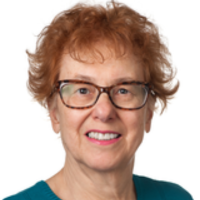 The ASBMR Paula Stern Achievement Award annually recognizes a woman in the bone field who has made significant scientific achievements and who has promoted the professional development/advancement of women in the field. Dr. Stern is a leader in the field of bone and mineral research. Her contributions include the first bioassay for 1,25 dihydroxy vitamin D, studies on the effects of thyroid hormone on bone metabolism, and most recently studies on alternative signal transduction pathways for parathyroid hormone. The award includes a $2,000 USD honorarium and a plaque which is presented at a morning plenary session at the Annual Meeting.
Paula Stern was the first female president of ASBMR, a founding member of the National Osteoporosis Foundation, and has served ASBMR as a volunteer leader in numerous capacities, including most recently as the chair of the Science Policy Committee and ASBMR representative to the Federation of American Societies for Experimental Biology Board.
Nomination Requirements
- Provide an established record of peer-reviewed government or private research grant funding as Principal Investigator (PI) or as a co-investigator/project leader with a significant role on multi-project/collaborative grants.
- Provide a distinguished record of publications in bone and/or mineral research.
- Describe the nominee's record of supervising junior research.
*Any interruption in a candidate's career as an independent investigator will be taken into account in determining eligibility.
Past Recipients
- 2025: Sylvia Christakos, PhD
- 2024: Yumie Rhee, MD, PhD
- 2023: Lilian Plotkin, PhD
- 2022: Anna Teti, PhD
- 2021: Sherri-Ann Burnett-Bowie, MD, MPH
- 2020: Natalie Sims, PhD
- 2019: Ernestina Schipani, MD, PhD
- 2018: Elizabeth Shane, MD
- 2017: Alberta M Zallone, PhD
- 2016: Merry Jo Oursler, PhD
- 2015: Teresita Bellido, PhD
- 2014: Jillian Cornish, PhD
- 2013: Nancy Lane, MD
- 2012: Theresa Guise, MD
- 2011: Marie Demay, MD
- 2010: Laurie McCauley, DDS, PhD
The Shirley Hohl Service Award
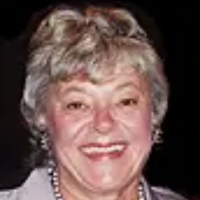 The Shirley Hohl Service Award is given to an individual whose activities best represent the dedicated and unselfish devotion in service to the Society and its mission and goals as exemplified by Shirley Hohl, ASBMR's Founding Executive Secretary. This award is given to an individual who is recognized by members of the Society as having made significant contributions to the mission of the ASBMR. The award includes a $2,000 USD honorarium and a plaque presentation at the Town Hall Meeting during the Annual Meeting.
Shirley Hohl worked with the ASBMR from its inception, serving first as Executive Secretary, then as Consultant. She maintained the latter position until her death in 1996. Her presence markedly influenced the development of the Society and her contributions were fundamental to establishing the infrastructure of the Society and its success.
Nomination Questions
NOTE: Please see the Society's complete mission statement and most recent 2026-2028 Strategic Plan prior to submitting this award.
- Provide some general background on the nominee's commitment to service and indicate why that commitment/service is outstanding.
- State how the achievements of the nominee have met specifically one or more of the stated goals of the ASBMR mission and strategic plan. In what way(s) have these been met above and beyond the call of duty?
- Has the service reached the public at large, other scientific groups, or allied organizations?
Past Recipients
- 2025: Cheryl Ackert-Bicknell, PhD
- 2024: Rachelle Johnson, PhD
- 2023: Rhonda Prisby, PhD
- 2022: Sylvia Christakos, PhD
- 2021: Jane Aubin, PhD
- 2020: Douglas P Kiel, MD, MPH
- 2019: Roberta Faccio, PhD
- 2018: Jane A Cauley, DrPh
- 2017: Roberto Civitelli, MD
- 2016: Robert A Adler, MD
- 2015: Suzanne M Jan De Beur, MD
- 2014: Keith Hruska, MD
- 2012: Janine Danks, PhD
- 2011: Joan A McGowan, PhD
- 2010: Robert Nissenson, PhD
- 2008: Elizabeth Shane, MD
- 2007: Philip A Osdoby, PhD
- 2006: Paula Stern, PhD
- 2005: Julie Glowacki, PhD
- 2004: Jane Lian, PhD
- 2003: Marc K Drezner, MD
- 2002: Nicola Partridge, PhD
- 2001: Lawrence G Raisz, MD
- 2000: Arnold J Kahn, PhD
- 1999: Murray J Favus, MD
- 1998: Norman H Bell, MD
- 1997: Louis V Avioli, MD
The Stephen M. Krane Award
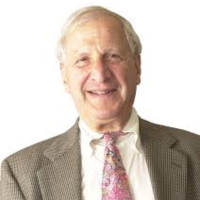 The Stephen M. Krane Award is given in recognition of outstanding achievements in basic, translational or clinical research in inflammation and/or skeletal matrix biology. The award includes a $2,000 USD honorarium and a plaque which is presented after a morning plenary session at the Annual Meeting.
Stephen Krane, MD, was a preeminent leader, investigator, mentor, teacher and clinician in the field of rheumatology, matrix biology and bone and mineral metabolism for ~50 years. During his illustrious career, Dr. Krane's service and devotion to the ASBMR contributed greatly to its emergence as the premier society in the field of bone and mineral research. Dr. Krane was a founding member of the ASBMR, and its fourth President.
Nomination Questions
- Outline the nominee's record of outstanding achievements in basic, translational or clinical research in inflammation and/or skeletal matrix biology.
- What are the wide-ranging applications to the bone and mineral field?
Past Recipients
- 2025: Joy Wu, MD, PhD
- 2024: Sarah Dallas, PhD
- 2023: Melissa Kacena, PhD
- 2022: Teresita Bellido, PhD
- 2021: Mary C Farach-Carson, PhD
- 2020: Theresa Guise, MD
- 2019: Laurie McCauley, PhD
- 2018: Marian F Young, PhD
- 2017: Ellen M Gravallese, MD
- 2016: Nancy Lane, MD
The William F. Neuman Award
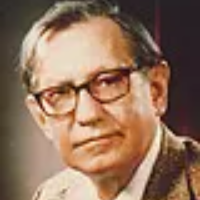 The William F. Neuman Award recognizes an ASBMR member for outstanding and major scientific contributions in the area of bone and mineral research and for contributions to associates and trainees in teaching, research, and administration. The award includes a $2,000 USD honorarium and a plaque which is presented at a morning plenary session at the Annual Meeting.
William F. Neuman, PhD, was a world-renowned scientist in the field of mineral metabolism. His seminal work on bone-seeking isotopes as part of the Manhattan Project was followed by major works in the chemistry of mineral and matrix, the function of bone cells, the metabolism of parathyroid hormone, and the concept of bone membrane. Dr. Neuman, along with his wife Margaret, authored the seminal monograph, "The Chemical Dynamics of Bone Mineral," in 1958. He and his associates formed the Department of Radiation Biology and Biophysics at Rochester, where he served as co-chair and then chairman.
Nomination Questions
- In priority order, discuss major developments, seminal investigations, and major scientific observations with a brief general statement about why these were landmark achievements.
- Outline progression of the nominee's research over time. How has his/her research advanced the field? What are the long-term ramifications of the research in broad terms?
- What were the pioneering achievements of the nominee? Include examples of leadership on national and international levels; describe specific examples that clearly indicate a level of leadership beyond the average for his/her peers.
- Describe specific examples of instances of recognition by peers.
*Nominees may be contacted to provide additional information.
Past Recipients
- 2025: Mone Zaidi, MD, PhD
- 2024: Andrew Arnold, MD
- 2023: Richard Eastell, MD
- 2022: Brendan Lee, MD, PhD
- 2021: Steven Cummings, MD
- 2020: John Bilezikian, MD
- 2019: Juliet Compston, MD
- 2018: Vicki Rosen, PhD
- 2017: Stavros Manolagas, MD, PhD
- 2016: Clifford Rosen, MD
- 2015: Lynda F Bonewald, PhD
- 2014: Francis Glorieux, MD, PhD
- 2013: John Eisman, MBBS, PhD
- 2012: Sundeep Khosla, MD
- 2011: Gerard Karsenty, MD, PhD
- 2010: Michael Parfitt, MD
- 2009: Roland Baron, DDS, PhD
- 2008: David Baylink, MD
- 2007: Lance E Lanyon, PhD, BVSc
- 2006: Jane Lian, PhD, and Gary Stein, PhD
- 2005: Mark R Haussler, PhD
- 2004: Jane E Aubin, PhD
- 2003: Henry Kronenberg, MD
- 2002: Lawrence Riggs, MD
- 2001: Harold M Frost, MD
- 2000: Graham Russell, MD
- 1999: Gregory R Mundy, MD
- 1998: Steven L Teitelbaum, MD
- 1997: Tatsuo Suda, DDSc, PhD
- 1996: Melvin Jacob Glimcher, MD
- 1995: Anthony W Norman, PhD
- 1994: Thomas John Martin, MD, DSc
- 1993: Gideon A Rodan, MD, PhD
- 1992: Herbert A Fleisch, MD
- 1991: Claude D Arnaud, MD
- 1990: Robert H Wasserman, PhD
- 1989: Stephen M Krane, MD
- 1988: Louis V Avioli, MD
- 1987: John T Potts Jr, MD
- 1986: Lawrence G Raisz, MD
- 1985: Hector F DeLuca, PhD
- 1984: Roy V Talmage, PhD
- 1983: Harold Copp, MD, PhD
- 1982: Paul L Munson, PhD
- 1981: Gerald D Aurbach, MD